About Us
Taught exclusively in English, our summer school pulls teenagers away from their screens and devices, and plunges them into exciting and intensive artistic projects!
We provide a refreshing alternative to formal academic summer courses, and greater structure and focus than those which, at their base, aim merely to ‘keep students occupied’.
Under the expert eyes of an experienced English teacher and Art specialist, our students undertake courses that stimulate them intellectually, build teamwork through group-based tasks, and combine fun writing challenges with the pleasure of art creation.
Arcadia English provides scope for active discussion and creative writing.
Arcadia Art provides space for physical creativity and self-expression.
Our weekly intake (up to sixteen) is small, enabling us to provide a high level of supervision and care, and do our very best to foster the unique talents of each and every student.
Whether it is drawing, painting or sculpting in our practical workshops, or creating stories, scripts or poems in our informal writing sessions, our school is always a ‘hands on’ experience, wherein smartphones, tablets and computers are put aside in favour of pens, pencils, papers, notebooks and brushes.
Each course will yield a single, comprehensive art work and a structured piece of creative writing.
Although each week is self-contained, the four week Arcadia English & Art programme has been carefully designed to build up art and literary English skills incrementally. So, for those eager to sharpen both, the entire four-week course is recommended!
Courses 2026
Weeks 1-4 – Creative writing in English
Depending upon the week, our students will either sharpen their descriptive abilities, work through the process of story creation, expand their knowledge of fiction genres, or learn to better express themselves through the written and spoken word. The creative writing projects offered this summer will include autobiography, thriller and mystery stories, poetry, and science fiction / fantasy based drama.
Week 1 (July 20 – July 24) – drawing
We’ll start with simple lines and go from there: Add some curves, complexity and greater visual interest. This won’t be a matter of sketching an object but building up developed, line and value-based shapes and forms. Ultimately, we will be aiming for a series of varied flat designs that, through contour and shadow, provide an illusion of depth that extends well beyond the two-dimensional picture plane.
Key art elements: space, colour, shape, form, value and line.
Week 2 (July 27 – July 30) – painting
It’s not going to result in a picture as such, but the final, single image will be immediately recognisable, to you at least! Beginning with a grid, we’ll employ line-sketching techniques and then – for the real work to begin, select a bold colour palette. Using flat colours and recurring motifs, focussing closely, all the while, on symmetry, the end result will be a delightful riot of bright hues and vivid patterns.
Key art elements: contrast, pattern, balance, visual rhythm and proportions.
Week 3 (Aug 3 – Aug 7) – printmaking
This one will start not with images but words; sifting, sorting and then chopping them up! It will be a rebellious but poetic process, as we create collages from scratch, and form them into colourful, creative prints. Is it possible to wear art? Carry it around on our shoulders? If it can be printed many times, it can be viewed in multiple places. You’ll focus as much upon concepts this week as you will on craft and technique. And remember: not all artistic output is destined for the four walls of a gallery!
Key art elements: found objects, appropriation, collage (vs décollage) and ‘Pop-art.’
Week 4 (Aug 10- Aug 14) – sculpting
We’ll take, for inspiration, shapes and forms from nature, and work from there. Sculpting is an art-form that keeps both hands busy! Using traditional materials and ‘old school’ manufacturing techniques, you’ll learn more about what artist and furniture-maker Isamu Noguchi called the “elegant people’s art”, and craft something that not only looks good but has a direct, everyday function.
Key art elements: contour, biomorphic design, papier mâché, organic vs geometric shapes.
- Suitable for age 13+
- Maximum number of students 16 per week
- Basic conversational English required
Our Staff
Q1. What did you study at university?
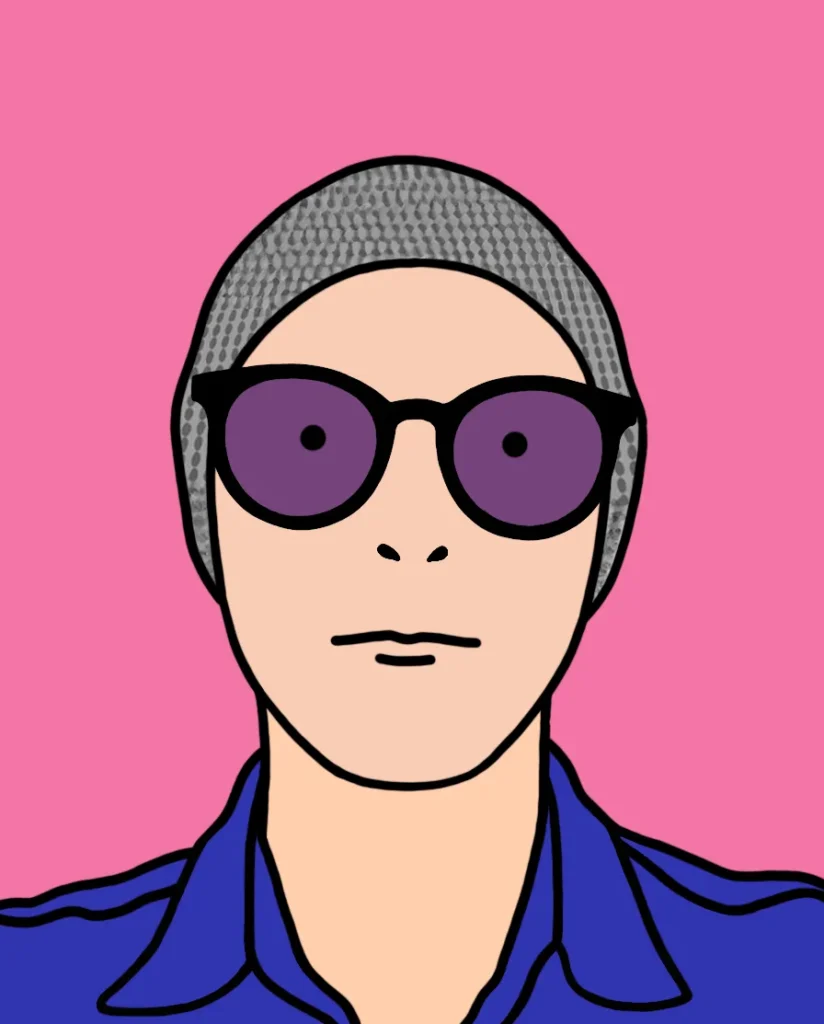
Mr. Jono
Fine Art.
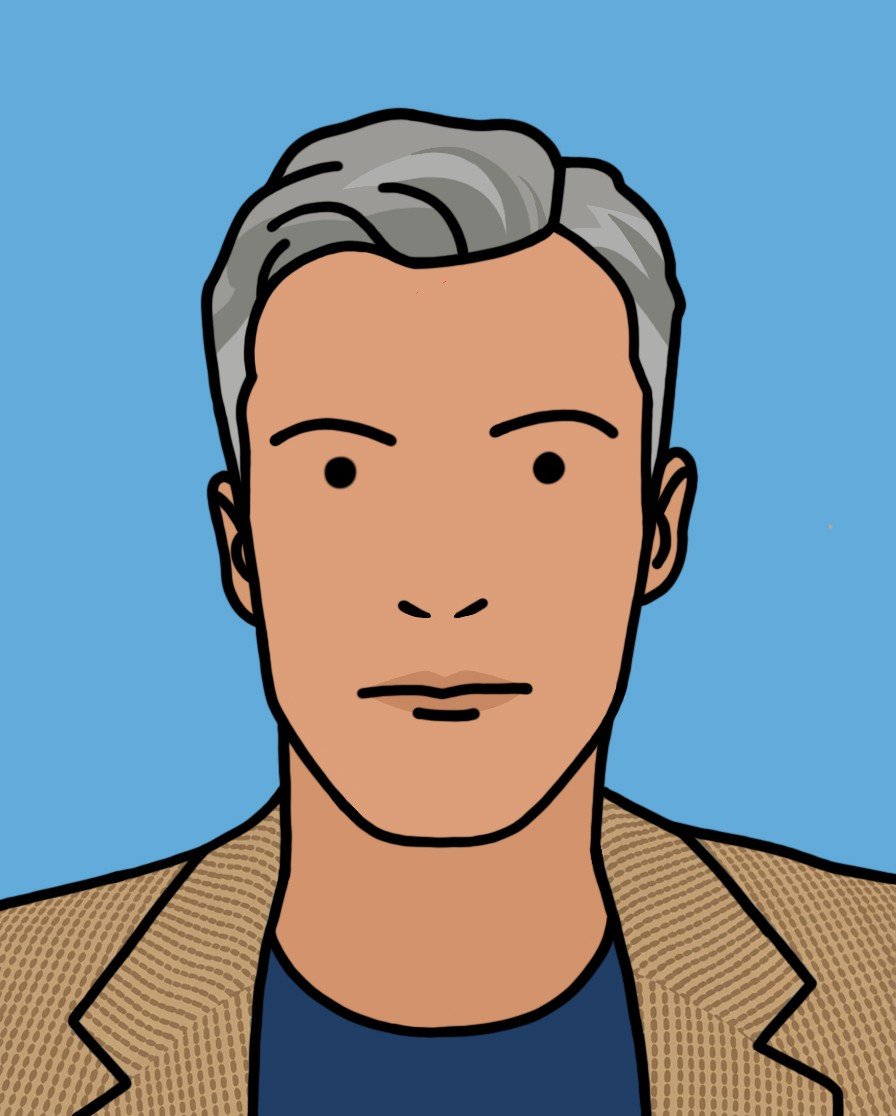
Mr. Mac
History.
Q2. Tell us a little about your professional background.
Mr. Jono
After finishing my Masters degree in the UK, I worked there as an art lecturer for a while. I’ve worked as a professor in the United States too, and at international schools in China, Germany and Japan.
Mr. Mac
My first job was at a bilingual private school in Paris. After that, I taught at the North London Collegiate School, which is the oldest girl’s school in the UK. Here in Tokyo, I’ve worked in three international schools, including Hiroo Gakuen.
Q3. What in particular do you like about teaching your subject?
Mr. Jono
Well, I’ve never seen myself as a regular teacher, standing in front of the class, talking, and pointing to the whiteboard. The project work I do, means walking around…interacting…not giving information out and testing knowledge, but offering guidance. Teaching art is about mentorship; it’s a wonderful process.
Mr. Mac
Teaching English is a lively affair because we discuss all sorts of topics, and there is usually no ‘right’ or ‘wrong’ way to approach them. I especially like teaching fiction and creative writing because it is most enjoyable aspect of the subject. I find the process of storytelling quite fascinating.
Q4. What inspired you to set up Arcadia English & Art?
Mr. Jono
We wanted to give some competition to the bigger schools! (laughs). What I mean to say, is that we saw being very small-scale as an advantage…an opportunity to do something different…offer a range of courses that are more personalised and unique. I’ve worked as an artist…I know how good it feels to create my own works, and I want to share that joyful experience with young people.
Mr. Mac
We work well together, and were excited by the idea of combining these two great subjects under one umbrella. Literary English requires a very different skill-set to art, but follows the same underlying principles: They may be using only words, but I want our students to feel artistic when they put pen to paper, just as they do when they paint and sketch.
Between them, Mr. Jono and Mr. Mac have thirty-five years of professional teaching experience. Skilled practitioners in their respective fields, they are able to offer the perfect blend of English and Art tuition. At the core, their educational aim is to make each step of their unique programme active and fun; a process of inquiry, which blurs the line between creative play and creative work.
Price
¥85,000 per course
Discount available for multiple week sign-ups
Access
2 minutes’ walk from Kanda Station in Tokyo.
We will let you know the details after signing up.